David Jones, artist and poet (1895-1974) begins his PREFACE TO THE ANATHEMATA :

'I have made a heap of all that I could find.' (1) So wrote Nennius, or whoever composed the introductory matter to Historia Brittonum. He speaks of an 'inward wound' which was caused by the fear that certain things dear to him 'should be like smoke dissipated'. Further, he says, 'not trusting my own learning, which is none at all, but partly from writings and monuments of the ancient inhabitants of Britain, partly from the annals of the Romans and the chronicles of the sacred fathers, Isidore, Hieronymous, Prosper, Eusebius and from the histories of the Scots and Saxons although our enemies . . . I have lispingly put together this . . . about past transactions, that [this material] might not be trodden under foot'. (2)

(1) The actual words are coacervavi omne quod inveni, and occur in Prologue 2 to the Historia.
(2) Quoted from the translation of Prologue 1. See The Works of Gildas and Nennius, J.A.Giles, London 1841.


Showing posts with label o. Show all posts

07 September 2021

Congratulations bLOG Appreciator


FIAPCE -1998- 
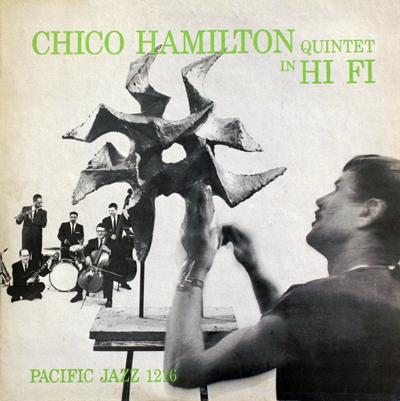
Yesterday, researching Gordon Parks' 1956 photographs of the Chico Hamilton Quintet for LIFE magazine, this popped up...

Theatre of the Actors of Regard  
 detail
 A Person Looks At A Work Of Art/
 someone looks at something...
  
 LOGOS/HA HA


05 September 2021

Spare Room 33


Heide Museum of Modern Art, (Heidelberg outside Melbourne, John and Sunday Reed)
Museum of New and Old Art, (Hobart, David Walsh)
TarraWarra Museum of Art (TarraWarra outside Melbourne, Eva and Marc Besen)
Buxton Contemporary (Melbourne, Michael Buxton)
.
.
Lyon Housemuseum and Housemuseum Galleries (Melbourne, Corbett and Yueji Lyon)
Justin Art House Museum (Melbourne, Charles and Leah Justin)
Pestorius Sweeney House (Brisbane, David Pestorius)
.
.
Spare Room 33 (Canberra, Peter Jones and Susan Taylor) 
Smaller in scale ("Cut your coat...) but not in serious intent. With Canberra in lockdown, Peter has taken to Instagram. Today, for example:

It being Sunday, we're enjoying pancakes and listening to 'difficult' music. It has always been grimly amusing to us that the barely three minutes of Webern's Opus 11 for cello and piano is now rising 107 years of age and can still drive people up the wall. Whereas we love the atonal, the serial, the minimalist.

Morton Feldman is one of our favourite composers. He was in love with sound, and his systems were dedicated to freeing it. His beef with his European contemporaries in the 1950's was that system and process had become for them the actual subject of musical composition (though we love their music too).

The added bonus with Feldman is that he was a brilliant writer and raconteur, was a close friend of many major New York artists, and thought deeply about the differences between their art and his. His friend Franz Kline's work is on the cover of the pictured LP from 1962.

Here's a typical Feldman musing: "Franz Kline once told me that it was only rarely that colour did not act as an intrusion into his painting ... In music it is the instruments that produce the colour. And for me, that instrumental colour robs the sound of its immediacy. The instrument has become for me a stencil, the deceptive likeness of a sound." And further: "I began to feel that the sounds were not concerned with my idea of symmetry and design, that they wanted to sing of other things. They wanted to live, and I was stifling them ... To make something is to constrain it. I have found no answer to this dilemma. My whole creative life is simply an attempt to adjust to it." Morton Feldman, 1972.

Last week (28 August) :

Six classic records (well, five classics, one not so much) featuring black and white cover photography.
1. Holger Czukay, 12" EP. Cover photo by Angus MacKinnon.
2. Steely Dan, Pretzel Logic. Cover photo by Raenne Rubinstein.
3. Jay White, Street Scene. Cover photo by Burt Goldblatt.
4. Chico Hamilton, Quintet in Hi Fi. Cover photo by William Claxton.
5. Ruby Braff, Braff!! Cover photo by Jay Maisel.
6. Bob Mould, Workbook. Rear cover photo by Marc Norberg.

Theatre of the Actors of Regard  
 detail
 A Person Looks At A Work Of Art/
 someone looks at something...
  
 LOGOS/HA HA


17 July 2021

Same as it ever was | Ar Cul and Otafuku


Theatre of the Actors of Regard   
 detail
 A Person Looks At A Work Of Art/
 someone looks at something...
  
 LOGOS/HA HA


29 June 2021

The Portraitist


We were impressed yesterday by a young fellow scribbler. 
At a family gathering with his spiral-bound notebook and black biro he rendered to many their individual portraits.


 verso instruction : could be cropped along edge     

Theatre of the Actors of Regard   
 detail
 A Person Looks At A Work Of Art/
 someone looks at something...
  
 LOGOS/HA HA


13 April 2021

'Fallingwater' ideogram


sky
fire
water 
earth

Some things, long present, only appear when we're ready to see them: Frank Lloyd Wright's ceiling light design for the dining room of 'Fallingwater'.

Theatre of the Architecture of Regard  
 detail
 A Person Looks At A Work Of Art/
 someone looks at something...
  
 LOGOS/HA HA


01 April 2021

Ramshead Revisited


An online sale in Bonhams' Fine Books & Manuscripts department this week featured a Georgia O’Keeffe skull of a Rocky Mountain Bighorn ram from Ghost Ranch, which sold for $15,300, well over its estimate of $5,000 to $7,000.
Lot 33. Skull of a Rocky Mountain Bighorn ram, complete with curled horns and portions of first vertebra, approximately 270 x 210 x 120 mm, desiccated, with minor active chipping and flaking.
Provenance: Georgia O'Keeffe; gifted to: Marilyn Thuma (a.k.a. Mym Tuma, recorded in her manuscript diary, July 1971).
Clearly reminiscent of Ram's Head, White Hollyhock Hills, this ram's head was presented to Tuma on July 22nd, 1971, during a sixteen day stay at Ghost Ranch, as recorded in her contemporary sketch diary, as "Ram's head in Studio." She would later add to the reminiscence, "She offered me a skull on the Ghost Ranch patio that I noticed had a bullet hole in it thinking I might like it in remembrance of her, a memento. I said, 'No, I could not take anything that died by trauma' so she took me into her studio and showed me this beautiful skull which I own that she said hung on her house above the gate for 30 years — 'A long time,' O'Keeffe said, 'It's brittle.'"
O'Keeffe's association with the ram's head is etched into our understanding of her — beginning with her iconic 1935 painting Ram's Head, White Hollyhock Hills. The ram's head would figure in a number of her works, but never so effectively. In 1968, photographer Arnold Newman captured O'Keeffe in front of another ram's head, reinforcing the association. In a way, they are the distillation of O'Keeffe's experience of New Mexico.
"When I found the beautiful white bones on the desert I picked them up and took them home too ... I have used these things to say what is to me the wilderness and wonder of the world as I live in it." The skulls for O'Keefe represent not death, but life, "The bones seem to cut sharply to the centre of something that is keenly alive ... even though it is vast and empty and untouchable—and knows no kindness with all its beauty" ("About Myself," essay in the exhibition catalogue for An American Place, 1939).


As kids, we had a pet lamb, Patrick, who soon became Patrick the head-butting ram. When he eventually died, we dropped his body into an old mine shaft out the back. Years later, I brought up his magnificent horned skull.


  As contemporary artist : with Patrick in the studio at Fosterville, 1972
Theatre of the Actors of Regard  
 detail
 A Person Looks At A Work Of Art/
 someone looks at something...
  
 LOGOS/HA HA


27 March 2021

Mirror Ball Mistaken For A PiƱata At Annual Collectors Club Dinner


Now we are about to begin, and you must attend; and when we get to the end of the story, you will know more than you do now about a very wicked hobgoblin. He was one of the worst kind; in fact he was a real demon. One day he was in a high state of delight because he had invented a mirror with this peculiarity, that every good and pretty thing reflected in it shrank away to almost nothing. 

illustration by Edmund Dulac
On the other hand, every bad and good-for-nothing thing stood out and looked its worst. The most beautiful landscapes reflected in it looked like boiled spinach, and the best people became hideous, or else they were upside down and had no bodies. Their faces were distorted beyond recognition, and if they had even one freckle it appeared to spread all over the nose and mouth. The demon thought this immensely amusing. If a good thought passed through any one's mind, it turned to a grin in the mirror, and this caused real delight to the demon. All the scholars in the demon's school, for he kept a school, reported that a miracle had taken place: now for the first time it had become possible to see what the world and mankind were really like. They ran about all over with the mirror, till at last there was not a country or a person which had not been seen in this distorting mirror. They even wanted to fly up to heaven with it to mock the angels; but the higher they flew, the more it grinned, so much so that they could hardly hold it, and at last it slipped out of their hands and fell to the earth, shivered into hundreds of millions and billions of bits. Even then it did more harm than ever. Some of these bits were not as big as a grain of sand, and these flew about all over the world, getting into people's eyes, and, once in, they stuck there, and distorted everything they looked at, or made them see everything that was amiss. Each tiniest grain of glass kept the same power as that possessed by the whole mirror. Some people even got a bit of the glass into their hearts, and that was terrible, for the heart became like a lump of ice. Some of the fragments were so big that they were used for window panes, but it was not advisable to look at one's friends through these panes. Other bits were made into spectacles, and it was a bad business when people put on these spectacles meaning to be just. The bad demon laughed till he split his sides; it tickled him to see the mischief he had done. But some of these fragments were still left floating about the world, and you shall hear what happened to them.

Hans Christian Anderson
The Snow Queen : A Tale in Seven Stories
First Story : Which Deals with a Mirror and its Fragments

...and you shall hear what happened to them. 

Earlier that evening, before the awful mistake...
Theatre of the Actors of Regard  
 detail
 A Person Looks At A Work Of Art/
 someone looks at something...
  
 LOGOS/HA HA


21 February 2021

Our Father who art in ...


Patron
/ˈpeÉŖtr(ə)n/
from Latin pater, patr- ‘father’
to Latin patronus ‘protector of clients, defender’,
to Old French patron,  
to Middle English patroun, patrone.

MOMA Patron Program

Unlock a new level of insider access, and make a greater impact. As a member of our Patron Program, you’ll enjoy exclusive events with artists, curators, and Museum leaders; recognition in our Annual Donor Listing; behind-the-scenes experiences, and more
.


Theatre of the Actors of Regard  
TAR Program

Behold

Theatre of the Actors of Regard  
 detail
 A Person Looks At A Work Of Art/
 someone looks at something...
  
 LOGOS/HA HA


09 January 2021

On Parade


Theatre of the Actors of Regard  
  detail
  A Person Looks At A Work Of Art/
  someone looks at something...
  
  LOGOS/HA HA


08 January 2021

Famous Chess Games : Duchamp v Eve Babitz


The Queen's Gambit   

Theatre of the Applaud of Regard  
  detail
  A Person Looks At A Work Of Art/
  someone looks at something...
  
  LOGOS/HA HA


07 January 2021

Famous Chess Games : Duchamp v Sisyphus


Theatre of the Actors of Regard  
 detail
 A Person Looks At A Work Of Art/
 someone looks at something...
  
 LOGOS/HA HA


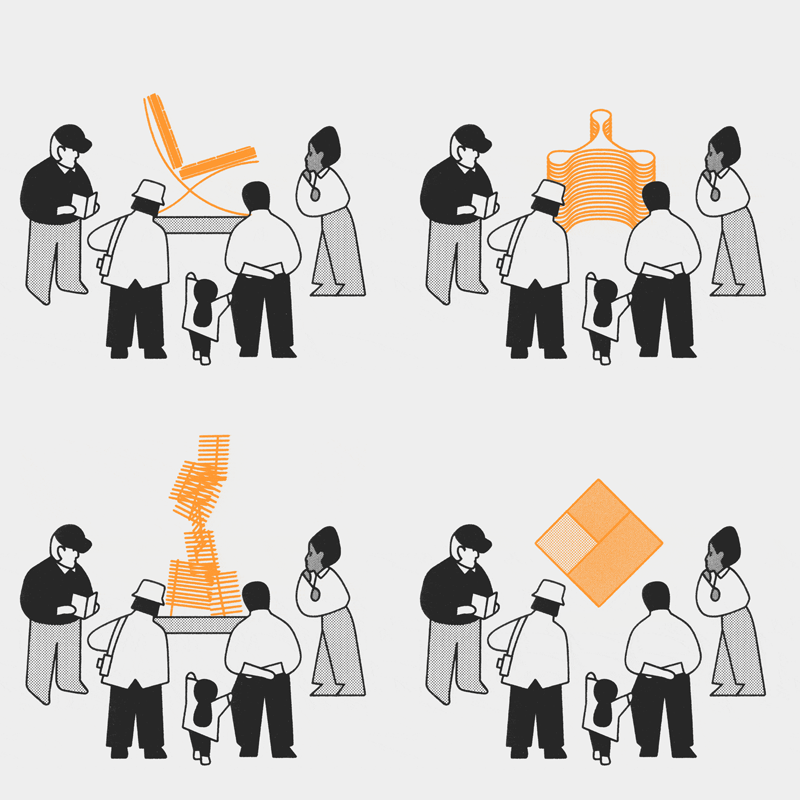
07 December 2020

TAR Label Mural ] for + after Donald Judd (


Theatre of the Actors of Regard  
 detail
 A Person Looks At A Work Of Art/
 someone looks at something...
  
 LOGOS/HA HA


24 November 2020

COVID-19 Melbourne : masks not required when outdoors | still required indoors


photo from today's Guardian  
Theatre of the Actors of Regard  
 detail
 A Person Looks At A Work Of Art/
 someone looks at something...
  
 LOGOS/HA HA


22 November 2020

TARebus


bLOGOS/HA HA šŸ’› rebus

"Largely gone from the funny pages but alive and well on the rear bumper of the car, the rebus is a visual puzzle that, in its various forms, encapsulates the history of alphabetic writing from ideograms (pictures designating concepts or things) to pictographs (pictures representing specific words or phrases) to phonograms (pictures representing specific sounds or series of sounds). Dictionaries struggle to define the term in such a way as to capture the range of shapes a rebus can take, typically focussing on its pictographic and phonogrammic attributes, forgoing mention of the ideographic. For example, the OED defines rebus as “a. An enigmatical representation of a name, word, or phrase by figures, pictures, arrangement of letters, etc., which suggest the syllables of which it is made up. b. In later use also applied to puzzles in which a punning application of each syllable of a word is given, without pictorial representation.”

... The simplest rebuses are those consisting only of letters: IOU, the (in)famous title of Marcel Duchamp’s moustached Mona Lisa “l.h.o.o.q.” (Elle a chaud au cul, literally something like ‘Her ass is hot,’ figuratively, ‘She’s horny’), and such staples of modern day texting as CUL8R or French @2m1 (Ć  deux m un, i.e., “Ć  demain” ‘[See you] tomorrow’)."


- Alexander Humez

Humez starts at "the funny pages", which is also how we know the rebus best. From 19th and 20th century French newspapers and trade cards, both of which we've collected. 

  original rebus artwork for Petit Illustri Amusant c.1906
(above and below by unknown artists) collection FIAPCE  
Theatre of the Actors of Regard    
  Le Chien Savant, a French trade card c.1890, 
  aka a TAR card, in which 
  - we regard...
  - a man with pipe and three cornered hat regards...
  - a clown-hatted clever dog regards... 
  a rebus of physical objects.

The young Marcel Duchamp would have grown up with such rebus word-image games as part of the day-to-day popular culture of France. Before we understood this, his LHOOQ work seemed intellectual, rarified, exotic. Now we appreciate that it follows upon the disruption-to-art news of the period (Mona Lisa stolen in 1911, recovered 1913) and is crudely street playful. 

Marcel Duchamp and Francis Picabia : Marcel Duchamp, 1919, L.H.O.O.Q. originally published in 391, n. 12, March 1920

When one knows of that popular culture common ground, of that mass daily multi-layered challenge of language and image play... after the newsprint and actuality collages, and the expanded view matrix of the various stages of Cubism,

Pablo Picasso, Siphon, Glass, Newspaper and Violin, 1912

and after Marcel Duchamp's LHOOQ, the productions of daDA and Surrealism appear obvious and inevitable. Works by children grown up, continuation rather than revolution.

 Francis Picabia, Chapeau de Paille?, 1921
 M... pour celui qui le regarde! Literally, it is addressed to
        for whoever looks at it! 
Theatre of the Actors of Regard    
        detail 
        A Person Looks At A Work Of Art/ 
        someone looks at something... 

        LOGOS/HA HA 

The view of  LHOOQ  from the distant Anglo-Antipodes is Shock of the New. Much less so where it happened. 


 Rene Magritte, L'Apparition, 1928


Above is a rebus-like portrait of Robert Rauschenberg, made in 2005 by the photographer Irving Penn. 

Today's ArtDaily Newsletter has an image of a TARist posed in regard of Robert Rauchenberg's 1955 "Rebus", now on show at MoMA. It's such a dynamic application of a title : a challenge to each person who regards this (and any other) arrangement to de-code the given, as if the world is a puzzle that can be solved and known.

Theatre of the Actors of Regard  
  Robert Rauschenberg's 'Rebus' on display during a press 
  preview of MoMA's first ever Fall Reveal at the Museum of 
  Modern Art on November 13, 2020 in New York City. 
  Cindy Ord/Getty Images/AFP

 detail
 A Person Looks At A Work Of Art/
 someone looks at something...
  
 LOGOS/HA HA


26 October 2020

recto TAR verso


We screen-snapped this image some while back, but didn't make notes. Was it by Ike Taiga? 


It intrigues in the manner of  Rene Magritte's Not to Be Reproduced (La reproduction interdite), 1937.


Today, a view from the meta-side.

Theatre of the Actors of Regard  
  detail
  A Person Looks At A Work Of Art/
  someone looks at something...
  
  LOGOS/HA HA


23 October 2020

Forest of TAR


 William Robinson, Landscape 19, 1987


 William Robinson, Sunset and Rising Moon, 1993

Theatre of the Actors of Regard    
 detail
 A Person Looks At A Work Of Art/
 someone looks at something...
  
 LOGOS/HA HA